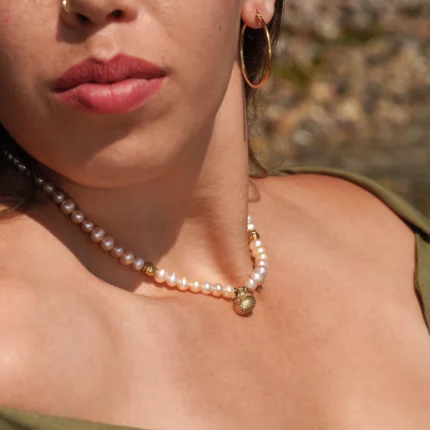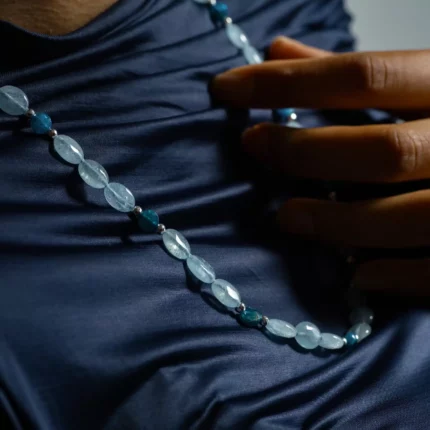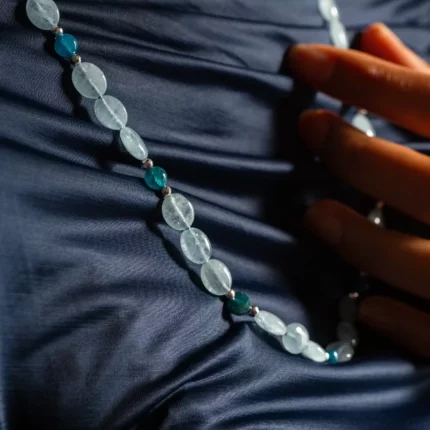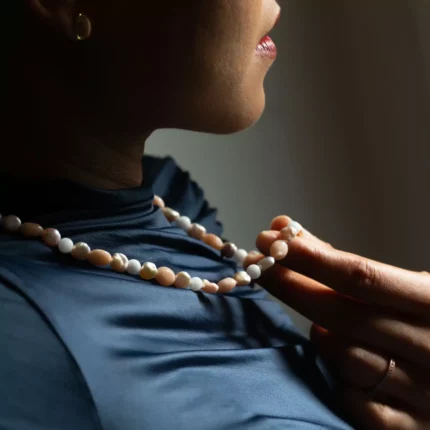

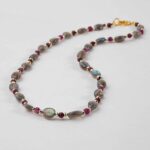
Labradorite, Garnet & Ruby Necklace – VALENTINA
CHF 180
Handcrafted in our Geneva workshop with natural gemstones. Each piece is one of a kind, a unique expression of the stones’ natural beauty.
Out of stock
Standard delivery or recorded delivery.
Click & Collect
Available within 1 to 2 working days.
- Cornavin Shop
- Balexert Shop
Delivery within Europe
CHF 10.- for delivery within Europe, excluding Switzerland.
For further information, please see our terms and conditions for delivery terms.
Back
Return period: 14 days.
Product information
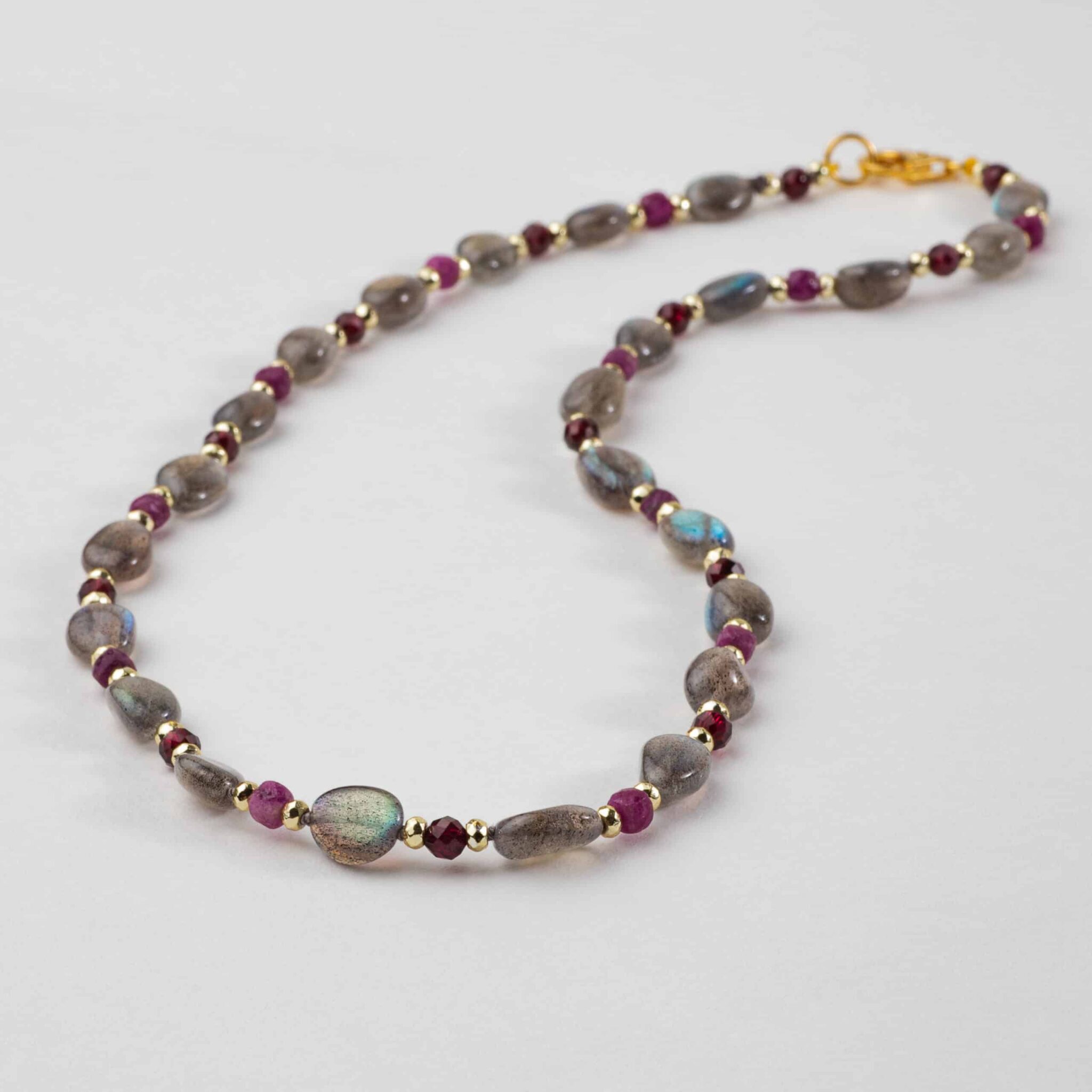
| Length | 48 cm |
|---|---|
| Bead Size | 4–10 mm |
| Stringing Material | Silk cord |
| Clasp | Gold-plated silver |
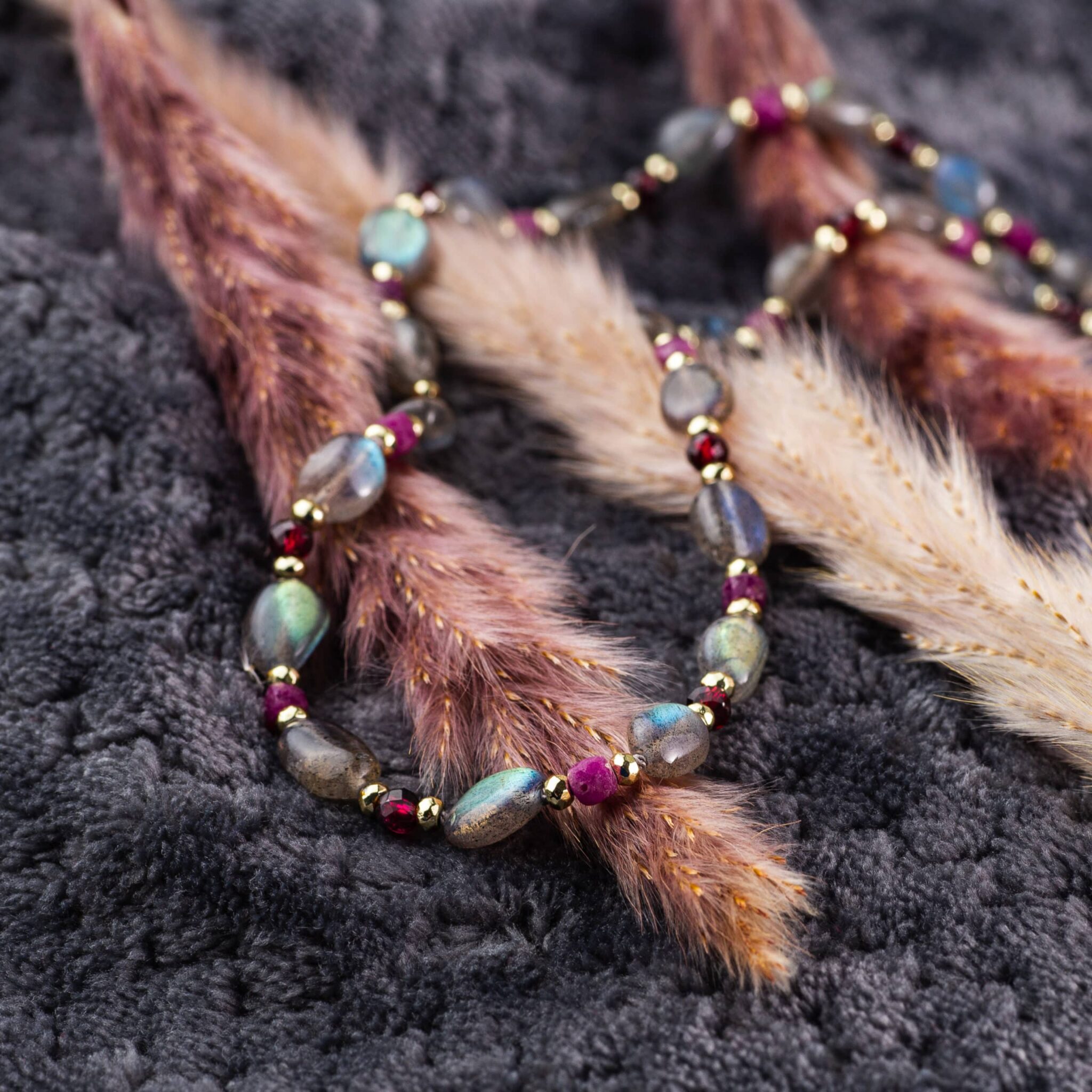
Labradorite, Garnet & Ruby Necklace – VALENTINA
Gold-plated haematite beads add a touch of sparkle.
Symbolism of Labradorite: Protection – Purification – Renewal
Symbolism of Garnet: Strength – Courage – Grounding
Symbolism of Ruby: Creativity – Energy – Passion
About labradorite
Labradorite is a feldspar famous for its labradorescence: flashes of blue, green, gold and sometimes purple that dance across its surface as the stone is turned in the light. This play of colour comes from the way light is reflected between the fine layers inside the crystal. It takes its name from Labrador, in Canada, where it was first described in the 18th century. Main deposits: Madagascar, Canada, Finland and Norway.
About garnet
The word “garnet” comes from the Latin granatum, “pomegranate”, a nod to the deep red seeds of the fruit. Garnets are a family of minerals sharing the same crystal structure, found in almost every colour. Almandine, the variety used for our stones, owes its rich red to reddish-brown hue to the iron it contains. Main deposits: Brazil, India, Sri Lanka, Madagascar, Australia and Russia.
About ruby
The name ‘ruby’ comes from the Latin ‘rubeus’, meaning ‘red’. Ruby is the red variety of corundum and owes its colour to chromium. It has been mined in Myanmar (formerly Burma) for over 2,000 years, and the Mogok mines are famous for producing some of the finest rubies in the world. In Sanskrit, ruby is called ‘ratnaraj’, meaning ‘king of gems’, and its colour was believed to reveal an unquenchable inner fire. In Christian tradition, it symbolises the blood of Christ and adorned cardinals’ rings until the Second Vatican Council. Over the centuries, many red stones have been mistaken for rubies: the famous Timur Ruby, a 361-carat gem engraved with the names of Mughal emperors and now in the British Royal Collection, is in fact a red spinel. Main deposits: Myanmar, Thailand, Sri Lanka, Cambodia, Mozambique, Tanzania, Vietnam, Afghanistan and Pakistan.