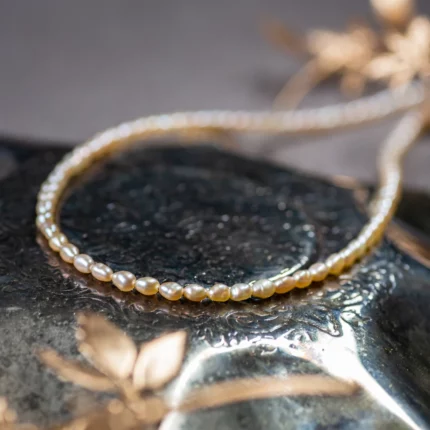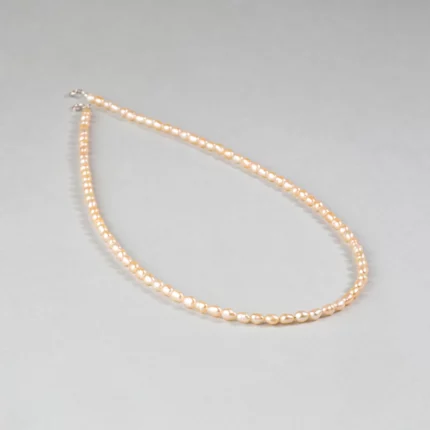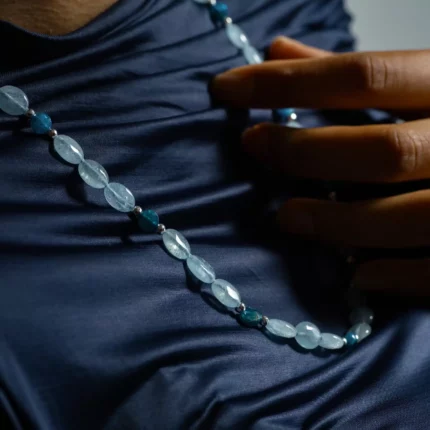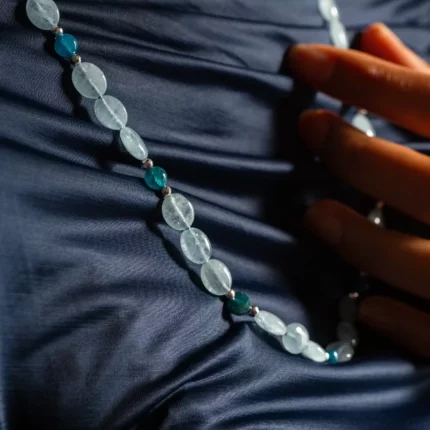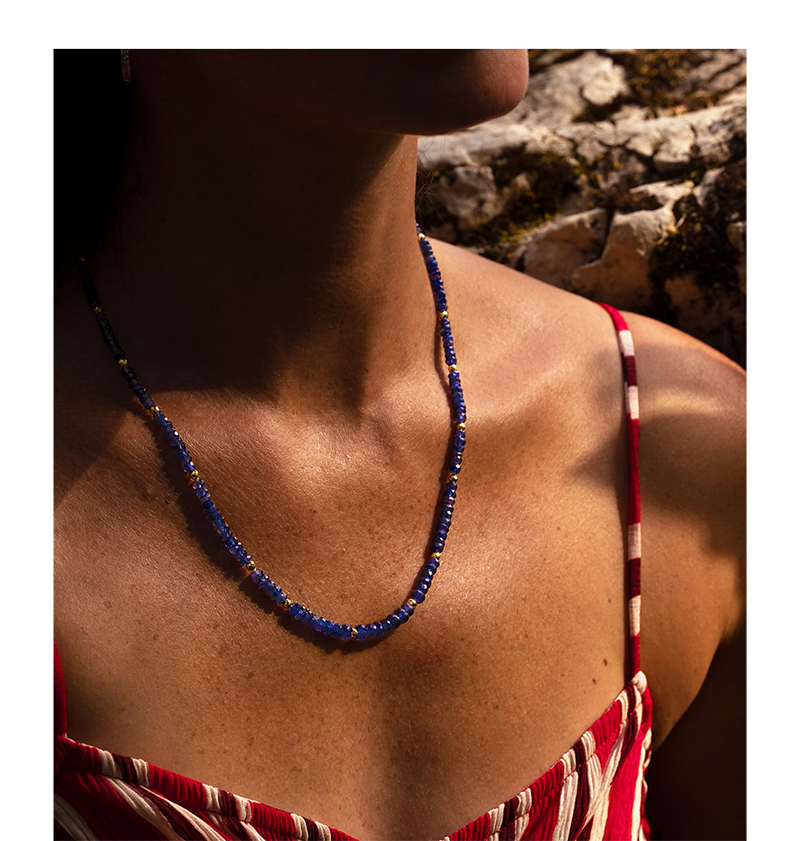
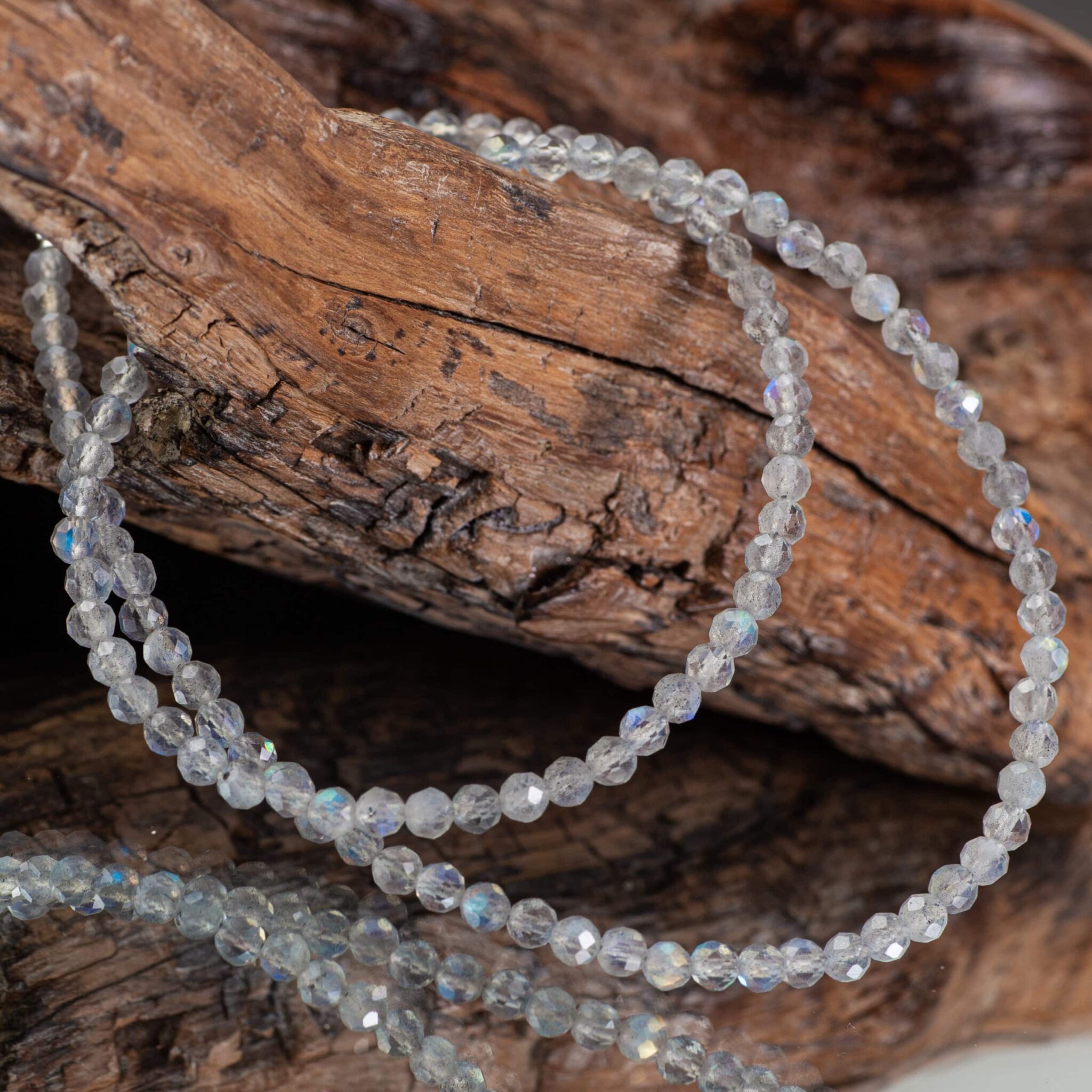
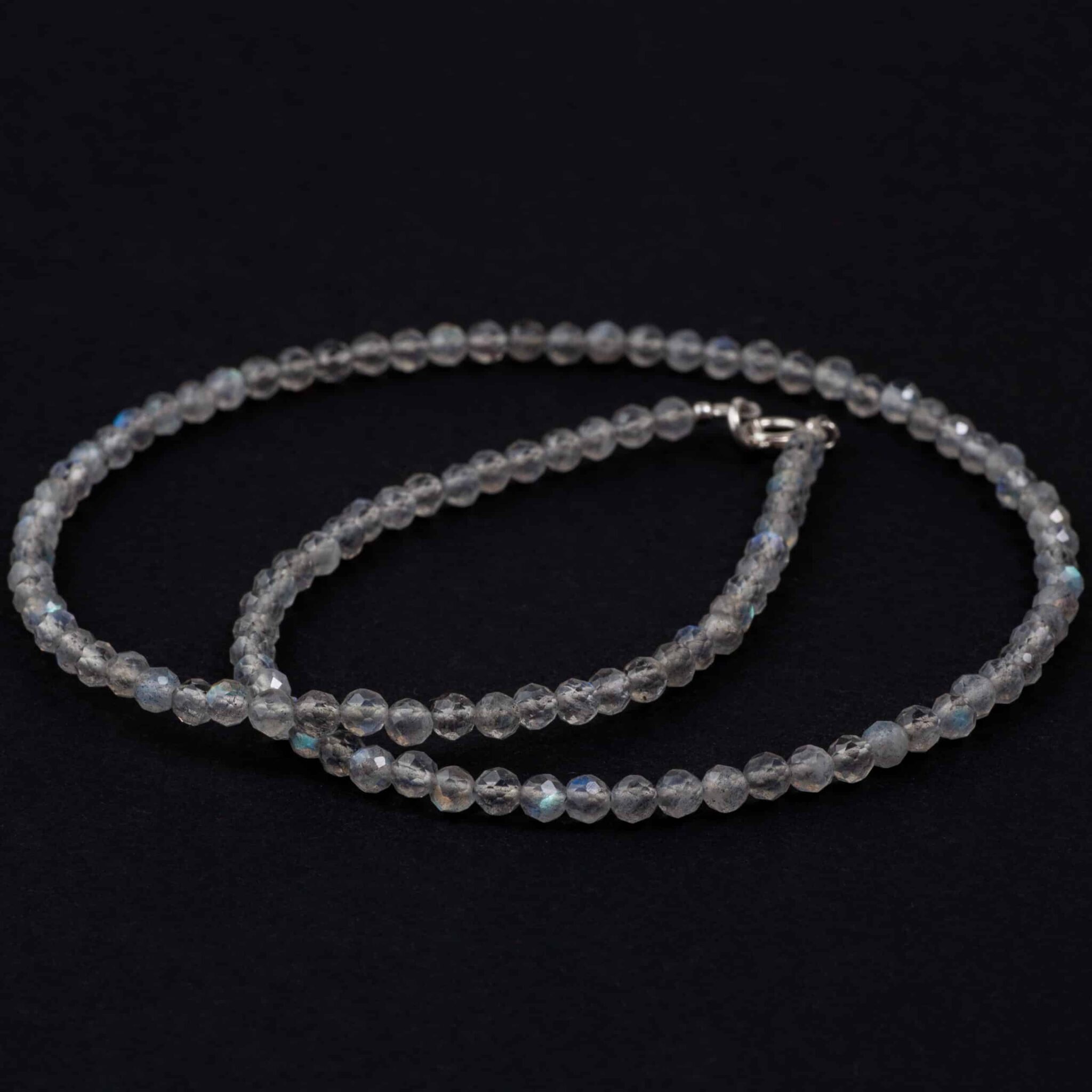
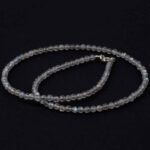
Faceted Labradorite Necklace, 4mm
CHF 69
Labradorite necklace, handcrafted in our Geneva workshop from 4 mm faceted beads strung on steel wire. The tiny facets catch the light and reveal the natural brilliance of the stone.
Handmade in Geneva · 100% natural stone · Delivery to Switzerland & Europe
2 in stock
- Labradorite is a fairly hard stone, but a sharp knock can still chip it. Take your jewellery off before sport or any physical activity.
- Water won’t harm labradorite, but avoid leaving it to soak.
- Take your jewellery off before swimming in the pool or the sea, as chlorine and salt can damage both the stones and the jewellery.
- Keep it away from harsh chemicals such as detergents and household cleaners, which can damage the stone.
- Keep your jewellery somewhere dry, away from direct light and heat.
- There are several ways to cleanse and recharge your stones. Find out more in our guide: how to cleanse and care for your crystals
Standard delivery or recorded delivery.
Click & Collect
Available within 1 to 2 working days.
- Cornavin Shop
- Balexert Shop
Delivery within Europe
CHF 10.- for delivery within Europe, excluding Switzerland.
For further information, please see our terms and conditions for delivery terms.
Back
Return period: 14 days.
Product information
| Length | approx. 40 cm |
|---|---|
| Bead Size | 4 mm |
| Stringing Material | Steel wire |
| Clasp | Silver |
| Materials | Natural gemstones |
| Symbol | Intuition, Protection, Transformation |
Faceted Labradorite Necklace, 4mm
Fine, light and endlessly versatile, our faceted chokers are made to be worn every day. Each bead is cut with tiny facets that catch the light and bring out the natural brilliance of the stone. Wear one on its own for a delicate touch, or layer several with your other jewellery to create a look that is entirely your own. Choose from a wide range of stones, from amethyst and labradorite to tiger’s eye and many more – each necklace strung by hand in our Geneva workshop.
About labradorite
Labradorite is a feldspar famous for its labradorescence: flashes of blue, green, gold and sometimes purple that dance across its surface as the stone is turned in the light. This play of colour comes from the way light is reflected between the fine layers inside the crystal. It takes its name from Labrador, in Canada, where it was first described in the 18th century. Main deposits: Madagascar, Canada, Finland and Norway.